Making Sense of the Game Over Controller Gaming SVG Digital Design Kit: Formats, Tradeoffs, and Best Uses
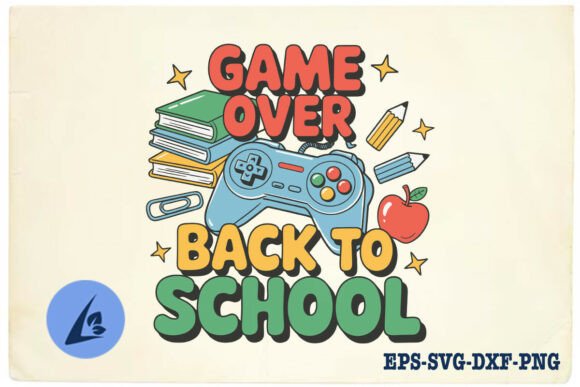
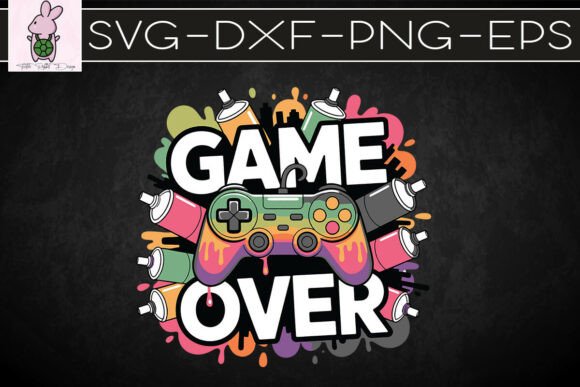
Designers and crafters who work with gaming-themed projects quickly learn that the right file can make or break a production run. The Game Over Controller Gaming SVG design kit has gained attention because it bundles multiple industry-standard formats together: SVG, PNG, DXF, and EPS. For many, having these four file types in one purchase removes a lot of guesswork. But before integrating the kit into your workflow, it helps to step back and ask a few practical questions. Which format performs best for print-and-cut machines? Where do high-resolution PNGs fall short compared to scalable vectors? How does licensing affect what you can actually do with the files once you own them? This article walks through those comparisons, the situations where each format shines, and the tradeoffs you might encounter depending on your software, materials, and end goals.
Why a Multi-Format Kit Changes the Way You Work
A single-format download often forces you to convert files or hunt down alternatives when you switch between tools. The Game Over Controller Gaming SVG Your Digital Design Kit addresses that friction by including four primary formats from the start. The value proposition is practical rather than flashy: you avoid conversion artifacts, save time, and maintain design integrity whether you are printing stickers, etching tumblers, or cutting heat transfer vinyl.
When you only have an SVG, for example, you might struggle with software that doesn’t handle scalable vectors well — some older plotter programs prefer DXF. On the other hand, if you receive only a PNG and need to resize the graphic for a large banner, you might see pixelation. By bundling SVG, PNG, DXF, and EPS together, this kit provides a ready answer for those mismatches. That matters especially in community workshops, small business setups, and maker spaces where equipment varies from one station to another.
Comparing SVG and PNG in the Context of Controller Graphics
The most frequent decision users face is whether to rely on SVG or PNG for their project. Both are included in this kit, and each serves a distinct purpose. SVG files are vector-based, which means you can scale a “game over” controller icon from a keychain size to a wall decal without losing sharpness. This is critical for CNC routers, laser engravers, and cutting machines like Cricut or Silhouette. The cutting path follows the vector outline, making SVGs the go-to format for any project involving blades or engraving tools.
High-resolution PNGs, by contrast, are raster images with a transparent background. The kit’s PNG files are designed at a large enough pixel dimension to print cleanly on mugs, shirts, stickers, and phone cases via direct-to-film or sublimation. The transparency means you don’t have to manually erase a white box around the design. However, PNGs have fixed pixel counts. If you need to blow up the “game over” message to poster size, a 300 DPI PNG may look softer than the same design exported from the SVG. That doesn’t make PNG inferior — it simply matches a different production method. For screen printing separations or quick mockups in Photoshop, a high-resolution PNG often fits the workflow better than a vector file.
When File Size and Detail Demand a Nuanced Choice
Gaming controller graphics often contain fine details like button labels, textured grips, or intricate text effects. Vector SVG handles these without blur, but complex gradients or glow effects sometimes render more faithfully in a pre-rendered PNG. The kit gives you both, so you can decide based on output. A seasoned designer might use the EPS or SVG for the main contour cut and import the PNG for the printed inner layer, aligning them in the same design space. This hybrid approach is common in layered decal creation and custom apparel.
The Role of DXF and EPS in Professional and Mixed-Environment Workflows
Two other formats in the kit — DXF and EPS — extend its usefulness to industries and software not typically associated with hobby crafting. DXF is a CAD-compatible format often required by CNC plasma cutters, some commercial engraving machines, and older sign-making software. If you are working with a fabrication shop that uses AutoCAD, Fusion 360, or similar tools, passing them a DXF file of the “game over” controller graphic eliminates the need for manual tracing. The vector data remains intact, which means fewer rejected samples and tighter machine tolerances.
EPS files occupy a similar role in professional print environments. Prepress workflows, large-format printers, and graphic design applications such as CorelDRAW or older versions of Adobe Illustrator sometimes prefer EPS over SVG. The format retains vector scalability and is widely accepted by commercial printing services. When you need to send a gaming-themed shirt design to a screen printer who requests EPS separations, having that file ready from the kit avoids the back-and-forth of reformatting. That said, EPS files can be bulkier and may not always import smoothly into cutting machine software without intermediate conversion — another reason the inclusion of multiple formats keeps options open.
Strengths and Real-World Tradeoffs of the Design Kit Approach
The clear strength of the Game Over Controller Gaming SVG bundle is the breadth of compatibility. You receive a cohesive set of files created from the same master artwork, so the design remains consistent whether you are working with a hobby-level cutting plotter, a professional print shop, or a laser engraver. This consistency reduces the small but frustrating misalignments that happen when using secondhand or auto-traced conversions from a single file type.
However, the multi-format convenience does not automatically solve every design challenge. The PNG, though high resolution, still locks you into a rasterized version of the original art. If you want to recolor individual elements of the controller graphic or change the “game over” typography, you will need to work from the SVG or EPS file. For users with vector editing experience, that’s standard practice. For someone new to design software, the learning curve of editing nodes in Inkscape or Illustrator can be steep. In those cases, the PNG acts as a fallback, but it doesn’t change the fact that deeper customization requires vector skills.
Another nuance involves software-specific quirks. Some versions of popular cutting software handle DXF imports with variable success: layers may shift, or open paths might appear where the original SVG had closed shapes. While the kit’s DXF file is crafted to minimize these issues, your machine’s firmware and driver version play a role. Testing on a small scrap piece before a full production run remains a sensible precaution, regardless of the file source.
Understanding Licensing: What You Can and Cannot Do
One of the less exciting but most important aspects of any digital design purchase is the end-user agreement. The kit clearly states that digital resale of the files on any platform is strictly prohibited and may be monitored for enforcement. This restriction is common in the design asset space and has real implications for how you use the files. You can create physical products — printed shirts, engraved tumblers, custom stickers — and sell those finished goods. You cannot, however, repackage the digital SVG, PNG, DXF, or EPS files and sell them as your own, whether bundled or individually, on Etsy, Shopify, or any file marketplace.
For a small business owner comparing different asset sources, this licensing model is often acceptable and even preferable because it protects the originality of the work. If you are a designer who regularly collaborates with print-on-demand platforms, the physical end product is where you add value. The licensing lets you do that. If your goal is to acquire a graphic to resell as a digital download to other crafters, this kit is not the appropriate choice, and you would need to seek out a commercial redistribution license — which is rarely offered for niche gaming designs. Being clear on this distinction saves legal headaches and aligns your purchase with your actual business model.
Who Benefits Most from the Game Over Controller Gaming SVG Kit
These files are well suited for individuals and small studios that move fluidly between different machines and substrates. A typical user might own a Cricut Maker for home projects, access a Glowforge at a local makerspace for wood engraving, and need to email a ready-to-print PNG to a third-party sticker manufacturer. In each of these scenarios, a different file format from the kit steps forward. The consistent artwork saves the user from adapting the design for each output, which is especially helpful when working against tight turnaround times for local events, gaming conventions, or custom orders.
The kit also fits well where collaborative work is involved. If one team member handles apparel production with a vinyl cutter and another manages sublimation for mugs, they can pull from the same set of files without duplicating conversion steps. The EPS provides a bridge to commercial offset printing if the project scales beyond on-demand production. This kind of interoperability is more of a practical advantage than a marketing claim; it directly reduces the number of file requests and troubleshooting calls a small team has to handle.
When a Single-Format Purchase Might Make More Sense
Not every project demands a multi-format kit. If you exclusively work in one closed ecosystem — say, a Silhouette Cameo running Studio software that rarely requires DXF — you might function perfectly with just the SVG and a good transparent PNG. In that case, paying for all four formats could feel like paying for duplicates you won’t use. Similarly, if your projects are always digital, such as integrating game-over screens into Twitch overlays or YouTube thumbnails, the vector files and high-res PNG are more than enough; the DXF and EPS might sit idle.
Another scenario to consider is when you need extremely detailed color separations or complicated halftone patterns for screen printing. While the EPS version supports professional workflows, some complex raster effects embedded in the original design may not translate cleanly to vector form. A dedicated raster-only artist might prefer a PSD or layered TIFF file, which this kit does not include. Recognizing these edge cases prevents you from assuming one download covers every conceivable printing technique.
Practical Comparisons for Common Projects
Imagine you want to create a set of gaming-themed coasters using a laser engraver. You would likely reach for the SVG or DXF. The DXF file communicates path data accurately to LightBurn or similar laser software, while the SVG can serve as the design base for template alignment. You might import the PNG as a visual reference but not use it for the actual engraving path. If you then decide to make matching gift boxes with cutout windows, the SVG cuts the box shape while the controller graphic is applied as a print-then-cut element using the PNG. Having both avoids the need to export and reconfigure mid-project.
Now consider a print-on-demand store selling hoodies. The PNG with a transparent background drops directly onto the mockup template without background interference. The vector EPS could be used to generate a higher-resolution raster if needed, but the prepackaged PNG often suffices. When the store later introduces embroidered hats, the DXF or SVG becomes critical for creating digitized stitch files used by embroidery software. The shift in application does not require a new purchase, just a different file from the same kit.
Evaluating File Quality and Avoiding Common Pitfalls
Design file kits vary in quality, and one selling point of the Game Over Controller Gaming SVG collection is that the artwork is created with cutting software in mind. Clean, closed paths, minimized stray nodes, and properly sized canvases reduce the friction of importing into older software versions. Even so, users should verify that the SVG scale matches their machine’s default workspace; occasionally, a file may open 10 times larger than expected. A quick measurement check in your design software before cutting saves material and frustration.
The high-resolution PNG is typically 300 DPI at a size that fits common merchandise dimensions, but stretching it far beyond its native pixel dimensions will introduce softness. If your application demands a wall-sized graphic, start from the vector versions and export at the required resolution. The multi-format kit hands you that option, but the responsibility of choosing the right starting point still rests with the operator.
Deciding on a Workflow That Lasts
Long-term, many creative professionals move toward owning versatile source files rather than chasing one-off graphics for each project type. The combination of SVG, PNG, DXF, and EPS in this kit supports that approach. As your toolchain evolves—from a desktop vinyl cutter to a commercial UV printer—the same core design adapts without repurchasing. That flexibility becomes more valuable over time, especially if the “game over” controller motif aligns with your brand or recurring product line.
At the same time, no file format covers every contingency. Complex color gradients, true metallic finishes, or simulated neon effects might demand post-processing in a raster editor even with the vector originals. The kit provides a strong starting point, but it does not replace the designer’s eye for finishing touches. A balanced view acknowledges that the kit solves compatibility and consistency issues while leaving room for creative refinement.
When you evaluate whether this package fits your current and future projects, consider the machines you own today and the ones you might access next month, the licensing boundaries that define your business model, and the time you spend converting files rather than making finished goods. For a wide swath of gaming crafters and merchandise creators, the answer is that having four formats at hand simply removes friction. For others, a more targeted purchase might suffice. Understanding where the strengths and limits overlap helps you invest in assets that genuinely move your work forward.